Stem Cell Therapy for Thin Endometrium and Ovarian Activation: Innovative Approach to Restore Fertility and Reproductive Health
Discover how stem cell therapy helps restore fertility by regenerating the thin endometrium and activating ovarian function. Learn about the science behind…
Infertility has become one of the most challenging health concerns for many women around the world. Among the various causes, two of the most difficult to treat are thin endometrium and ovarian dysfunction. A thin or unresponsive endometrium often prevents embryo implantation, while impaired ovarian function reduces egg quality and hormonal balance. In recent years, stem cell therapy has emerged as one of the most promising regenerative approaches to restore fertility and improve reproductive outcomes in women struggling with these issues.
What Is Stem Cell Therapy in Reproductive Medicine?
Stem cell therapy is a form of regenerative treatment that uses the body’s own repair mechanisms to restore damaged or dysfunctional tissues. Stem cells are unique because they have the ability to differentiate into specialized cells — in this case, into endometrial or ovarian cells — and to release bioactive molecules and growth factors that stimulate tissue repair, angiogenesis (formation of new blood vessels), and anti-inflammatory effects. Read more about stem cells therapy of infertility:Stem cells treatment of male and female infertility, results.
In reproductive medicine, mesenchymal stem cells (MSCs) derived from sources such as bone marrow, adipose tissue, umbilical cord, or menstrual blood are the most commonly used. These cells are biologically active and have a strong paracrine effect, meaning they do not simply replace damaged tissue but rather activate the body's own regenerative potential.

How Stem Cells Help in Thin Endometrium
A thin endometrium (less than 7 mm in the late follicular phase) is one of the main reasons for failed embryo implantation and IVF cycles. Traditional hormonal treatments, such as estrogen therapy, often fail to significantly thicken the endometrial lining in some women.
When stem cells are introduced into the uterus (via intrauterine infusion or local injection), they begin to:
-
Stimulate endometrial cell proliferation — stem cells secrete growth factors such as VEGF, IGF-1, and EGF, which enhance cell division and tissue regeneration.
-
Promote angiogenesis — new capillaries form within the endometrium, improving blood flow and oxygenation, which are essential for embryo implantation.
-
Regulate inflammation and fibrosis — stem cells reduce inflammatory cytokines and prevent the formation of fibrotic tissue, leading to a more receptive uterine lining.
-
Enhance hormonal responsiveness — regenerated endometrial tissue becomes more sensitive to estrogen and progesterone, improving its ability to support pregnancy.
Clinical studies have shown that women who received stem cell therapy for thin endometrium experienced a significant increase in endometrial thickness (by 1.5–3 mm on average) and higher rates of implantation and live birth after IVF compared to those who received standard hormonal therapy alone.
How Stem Cells Activate Ovarian Function
Ovarian aging or premature ovarian insufficiency (POI) leads to reduced egg quantity and quality, hormonal imbalance, and early menopause. This condition has traditionally been considered irreversible, but recent research suggests that stem cells can rejuvenate ovarian tissue and restore function.
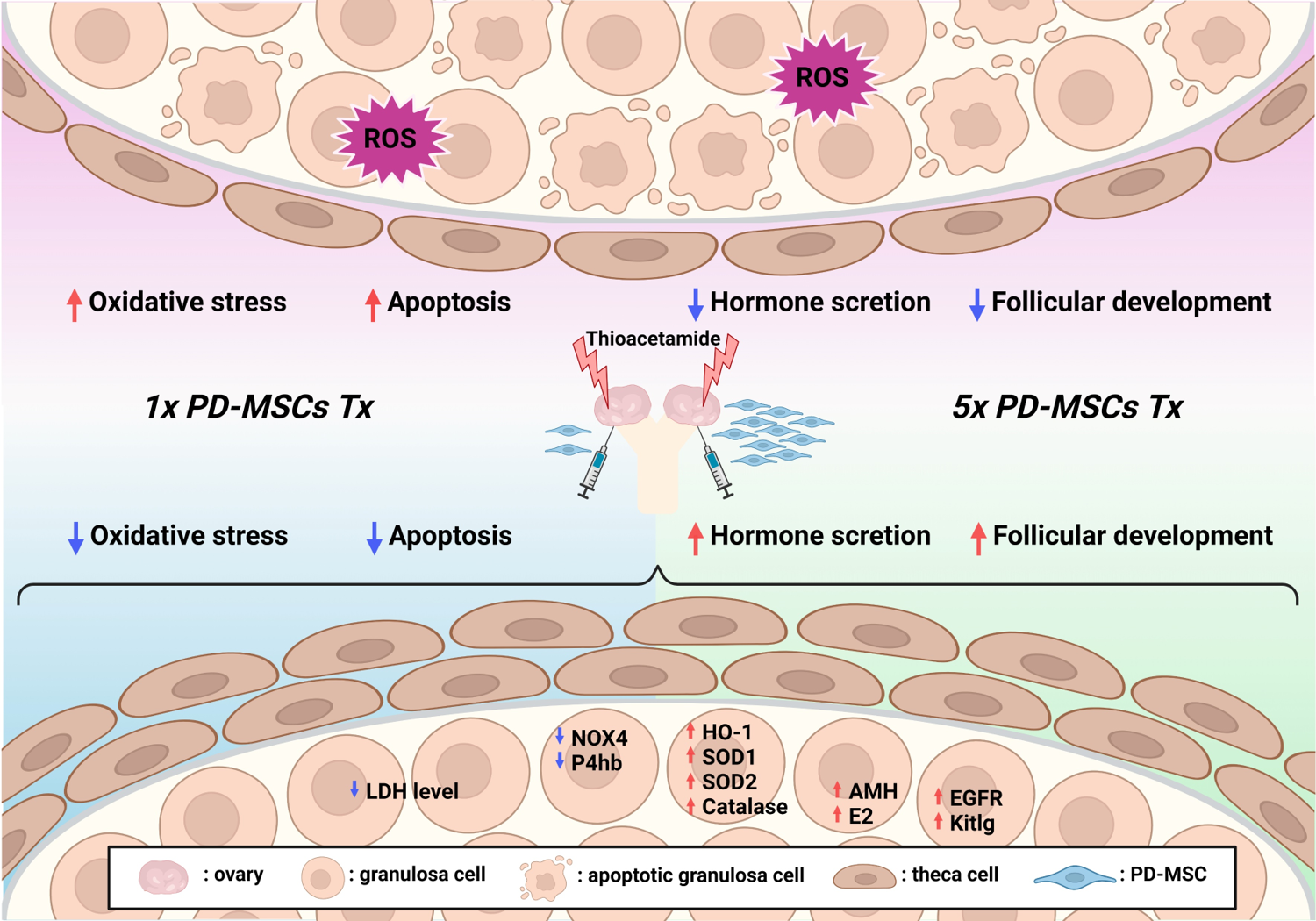
When MSCs + ENDSCs are administered intravenously or injected near the ovaries, they act through multiple mechanisms:
-
Improved microcirculation — stem cells increase blood flow to the ovarian tissue, enhancing nutrient and oxygen delivery.
-
Activation of dormant follicles — growth factors secreted by MSCs can awaken residual follicles, leading to new egg development.
-
Reduction of oxidative stress — stem cells neutralize free radicals and reduce tissue damage caused by aging.
-
Hormonal balance restoration — levels of estrogen and AMH (Anti-Müllerian Hormone) often increase after treatment, while FSH levels decrease, indicating improved ovarian function.
Several clinical trials and case reports have shown remarkable outcomes. For instance, in studies from China, Spain, and the United States, up to 50–70% of women with ovarian failure demonstrated improved hormone levels, menstrual cycle recovery, and even natural conception after receiving stem cell therapy. Find more results: Stem cell treatment of male and female infertility, how it works.
Scientific Evidence and Success Rates
Stem cell–based treatments for infertility are still considered innovative but rapidly advancing. According to published data:
-
Endometrial regeneration with stem cells led to pregnancy rates between 35–50% in women with previously unresponsive endometrium.
-
Ovarian rejuvenation studies have shown that around 40–60% of women with premature ovarian failure regained menstruation and ovulatory cycles.
-
In some clinical cases, AMH levels increased by 100–300% after therapy, indicating renewed ovarian activity.
-
No severe adverse effects were reported, confirming the safety profile of mesenchymal stem cell therapy.
While more large-scale randomized studies are needed, the existing results demonstrate a clear regenerative and hormonal effect that opens new possibilities for women who have exhausted conventional fertility treatments.
What to Expect After Stem Cell Therapy
The procedure is typically minimally invasive and performed on an outpatient basis. After stem cell administration, the regenerative process unfolds gradually over several weeks and months:
-
1–2 months: improvement in blood flow and hormonal response
-
3–6 months: visible endometrial thickening and/or restoration of menstrual cycles
-
6–12 months: improved egg quality, higher IVF success rates, and in some cases, spontaneous conception
Regular follow-up with ultrasound and hormonal tests helps monitor progress. Lifestyle factors such as nutrition, sleep, and stress management also play a significant role in achieving optimal results.
The Future of Regenerative Fertility Medicine
Stem cell therapy represents a new era in reproductive medicine — one that focuses not only on treating symptoms but also on restoring the natural biological functions of the female reproductive system. It offers hope for women who previously faced irreversible infertility due to endometrial or ovarian damage. Read more: Stem cells therapy for female infertility
Ongoing research is exploring combination approaches using stem cells, exosomes, and growth factors to further enhance outcomes. As regenerative technology evolves, it may become a mainstream option alongside IVF and hormonal therapy — or even replace them in certain cases.
Patient Reviews: Real Stories of Hope and Recovery
⭐️⭐️⭐️⭐️⭐️ – Anna, 37 years old (Spain)
“After years of unsuccessful IVF attempts due to a thin endometrium, my doctor recommended stem cell therapy. I honestly didn’t expect much, but within three months, my endometrial lining improved from 5 mm to 8 mm. On my next IVF cycle, I finally got pregnant. It felt like a miracle. I’m now in my second trimester and forever grateful for this treatment.”
⭐️⭐️⭐️⭐️⭐️ – Lilia, 42 years old (Ukraine)
“I was diagnosed with premature ovarian failure and had almost lost hope of becoming a mother. After receiving stem cell injections near my ovaries, my hormone levels started to improve. My FSH dropped, and I began ovulating again after five months. Even though I haven’t conceived yet, my body feels younger and healthier. I can truly feel the difference.”
⭐️⭐️⭐️⭐️⭐️ – Emily, 35 years old (United Kingdom)
“Stem cell therapy gave me a second chance. My uterus had been unresponsive after a D&C, and doctors told me surrogacy was the only way. Three months after stem cell treatment, my endometrium reached 8.2 mm, and I had a successful embryo transfer. Today, I’m holding my baby girl in my arms. Nothing compares to this joy.”
⭐️⭐️⭐️⭐️⭐️ – Aisha, 40 years old (UAE)
“I chose stem cell therapy to improve both my endometrium and ovarian function before IVF. The process was painless, and recovery was easy. My doctor noticed better blood flow to the uterus, and I even had more follicles developing naturally. I’m amazed by how powerful regenerative medicine can be.”
⭐️⭐️⭐️⭐️⭐️ – Maria, 39 years old (Italy)
“Before stem cell therapy, my AMH level was almost zero. Six months later, it had doubled, and my periods became regular again after two years of absence. My energy and mood improved too. Even if pregnancy doesn’t happen, I feel like I’ve regained my health and balance.”
⭐️⭐️⭐️⭐️⭐️ – Sophia, 36 years old (USA)
“I read a lot about stem cells before deciding to try them. My clinic used umbilical cord–derived MSCs, and within months I noticed hormonal balance returning. My IVF specialist said my uterine lining looked healthier than ever. This treatment changed everything for us.”
Conclusion
Stem cell therapy for thin endometrium and ovarian activation is a groundbreaking regenerative approach that targets the root cause of female infertility. By promoting tissue regeneration, improving blood flow, and restoring hormonal balance, stem cells help the body recover its natural reproductive potential.
With growing clinical evidence, promising results, and an excellent safety profile, this therapy offers new hope for women seeking to restore fertility and achieve pregnancy when traditional treatments have failed.