

Stem Cell Therapy for Stroke Recovery is an innovative field of regenerative medicine aimed at restoring damaged neurons, blood vessels, and brain functions. While it does not replace standard therapy, it can significantly enhance recovery after ischemic or hemorrhagic stroke.

Stem Cell Types Most Commonly Used in Stroke:
- Mesenchymal Stem Cells (MSC)
- Sources: bone marrow, adipose tissue, umbilical cord
- The most widely studied and applied type
- Functions:
o Reduce inflammation (modulate microglia and cytokines)
o Stimulate angiogenesis (formation of new blood vessels)
o Secrete neurotrophins (BDNF, NGF), enhancing neuroplasticity
o Improve tissue trophism and create regenerative conditions
- Neural Stem Cells (NSC)
- Source: embryonic or induced
- Functions:
o Differentiate into neurons, oligodendrocytes, astrocytes
o Integrate into neural circuits and restore impulse transmission
o Effective in forming new synapses
- Induced Pluripotent Stem Cells (iPSC)
- Patient-derived somatic cells reprogrammed to pluripotent state
- Functions:
o Enable creation of personalized neural progenitors
o Regenerate tissue with minimal rejection risk
- Endothelial and Glial Progenitor Cells
- Contribute to regeneration of blood vessels and glial (supportive) cells in the brain
- Stem Cell-Derived Exosomes
- Microvesicles 30–150 nm in size, secreted by MSCs/NSCs
- Cross the blood-brain barrier, carry microRNAs, proteins, and growth factors
- Activate regeneration without direct cell transplantation
PAY ATTENTION : NEW PROTOCOL OF STROKE RECOVERY 2026
How Stem Cells Act on Damaged Brain Tissue:
Mechanism What Happens
Neuroprotection Protection of neurons from secondary damage (inflammation, apoptosis)
Regeneration Differentiation into neuronal and vascular cells
Neuroplasticity Stimulation of new synapses, neural circuit reformation
Angiogenesis Formation of capillaries and improved perfusion
Immunomodulation Suppression of microglia and pro-inflammatory cytokines
Paracrine Effect Secretion of BDNF, GDNF, IGF-1, VEGF via exosomes
Expected Clinical Outcomes:
- Improved motor function (arms, legs)
- Speech restoration (with speech therapy support)
- Enhanced cognitive function (memory, attention)
- Reduced spasticity
- Alleviated depression and anxiety
- Better quality of life
When Is Therapy Most Effective:
- Subacute phase (2–8 weeks post-stroke): maximum benefit
- Chronic phase (3–6 months and beyond): possible benefit, but less pronounced
- Must be combined with physical, cognitive, and speech rehabilitation
Endothelial and Glial Progenitor Cells are key supporting cells in post-stroke brain repair. They do not become neurons but provide the vascular, structural, and metabolic foundation needed for neural tissue to function.

- Endothelial Progenitor Cells (EPCs)
Source:
- Bone marrow, peripheral blood, umbilical cord blood, embryonic tissue
Brain Repair Functions:
Function Mechanism
Angiogenesis Stimulate new capillary growth in ischemic zones (via VEGF, Ang1)
Blood-Brain Barrier Repair Strengthen the BBB, reduce permeability
Nutrient Transport Improve oxygen, glucose, and growth factor delivery
Injury Site Migration Chemotaxis via SDF-1, CXCR4
READ MORE INFORMATION:Stem Cell Therapy for Post-Stroke Recovery: ANDANTAGES
Clinical Effect:
- Enhanced cerebral microcirculation
- Reduced edema and toxicity
- Support for neurons in the penumbra (at-risk zone)
- Glial Progenitor Cells (GPCs)
Differentiate into:
- Astrocytes (neural support)
- Oligodendrocytes (myelin production)
- Partially into microglia (immune regulation)
Functions and Significance:
Astrocyte Progenitors:
Function Explanation
Homeostasis Maintain pH, ion balance, glutamate clearance
Neuron Nutrition Provide glucose, lactate
Metabolism Process neurotransmitters
Synapse Regulation Control synaptic activity (e.g., D-serine signaling)
Oligodendrocyte Progenitors (OPCs):
Function Role
Remyelination Restore damaged myelin sheaths
Neuroprotection Shield from glutamate toxicity
Growth Factor Secretion IGF-1, BDNF to support neuron survival and growth
Microglial Progenitors (rarely used directly):
Function Significance
Tissue Clearance Phagocytosis of apoptotic cells and debris
Inflammation Regulation Balance M1 (pro-inflammatory) and M2 (repair) phenotypes
Main Role in Stroke Recovery:
- EPCs form vascular pathways for nutrient and cell delivery
- GPCs support neurons structurally and metabolically, regulate inflammation, and aid myelin and synaptic repair
Together, they do not replace neurons but prepare a healthy environment that promotes brain recovery.
Neural Stem Cells (NSCs) are multipotent cells capable of differentiating into the three major CNS cell types:
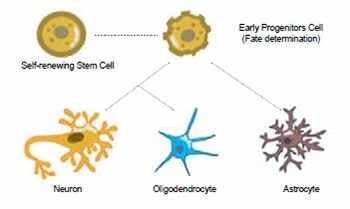
- Neurons
- Astrocytes
- Oligodendrocytes
Their use in stroke recovery is based on their ability to replace lost neurons, rebuild neural circuits, and modulate local inflammation.
Sources of NSCs:
- Embryonic NSCs (eNSC)
- Derived from the neural tube of embryos (usually at 6–8 weeks)
- Induced NSCs (iNSC)
- Derived from patient cells reprogrammed via iPSC technology
Mechanisms of Recovery with NSC Therapy:
- Neurogenesis (Neuron Formation)
- NSCs migrate to damaged brain regions (SDF-1, CXCL12 mediated)
- Differentiate into functional neurons that:
o Integrate into neural circuits
o Form new synapses
o Support sensorimotor function recovery
- Gliogenesis and Remyelination
- NSC → Oligodendrocytes: remyelinate surviving axons
- NSC → Astrocytes: restore ionic balance and protect against glutamate toxicity
- Paracrine Effects
- NSCs secrete neurotrophic and growth factors:
o BDNF, GDNF, IGF-1, VEGF - Promote neuron survival, angiogenesis, and reduce inflammation
- Inflammation Modulation
- Suppress overactive microglia (M1 phenotype)
- Reduce TNF-α, IL-1β levels
- Stimulate M2 repair responses
- Neuroplasticity
- Reorganize neural networks around infarct zones
- Enable cortical rewiring for functional recovery
Clinical Research Support:
Study Result
Phase I/II Clinical Trials (e.g., NCT01151124) – Confirmed safety, improvements in motor and sensory function
Models with iPSC-NSC – Improved motor recovery, reduced infarct area
Gage et al., – Cell Stem Cell Integration of NSCs and improved signal transmission
LEARN MORE: Stem cell treatment of complications after stroke.
Patient Benefits:
- Improved motor function (limbs)
- Restored speech and coordination
- Reduced spasticity and pain
- Enhanced cognition
- Better emotional stability (reduced depression)
Conclusion:
NSCs offer a multi-layered regenerative approach:
they can replace neurons, regulate inflammation, and create a favorable environment for brain recovery post-stroke.
Our Method:Combining multiple stem cell types in one therapy is a modern strategy for comprehensive brain repair after stroke, TBI, or neurodegeneration.
Why Combine Cell Types?
Because each cell type plays a unique role, and no single type can address all aspects of recovery.
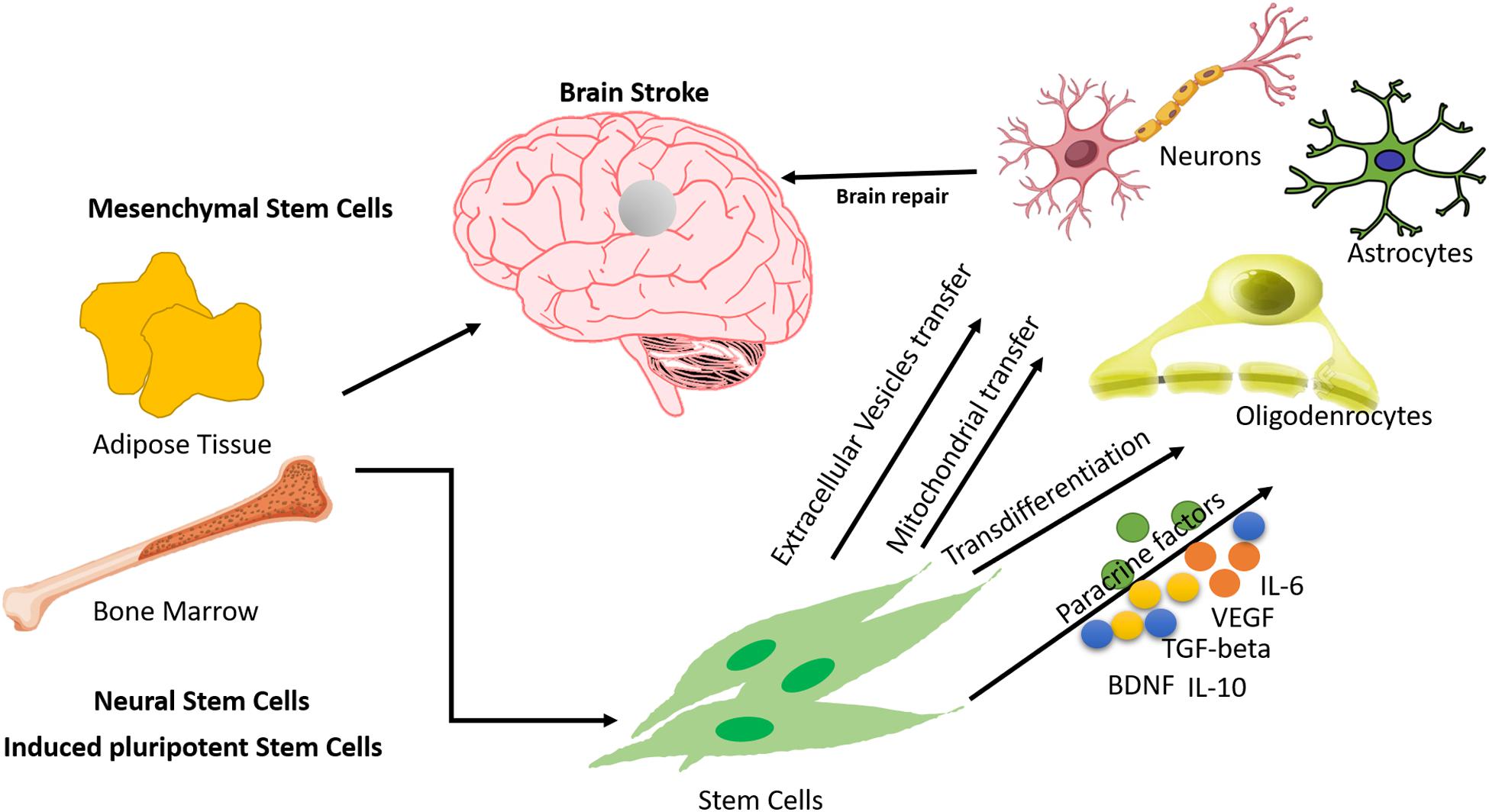
Cell Type Primary Role
Neural Stem Cells (NSC) Neuronal replacement, remyelination, synaptogenesis
Mesenchymal Stem Cells (MSC) Immunomodulation, neuroprotection, angiogenesis
Oligodendrocyte Progenitors (OPC) Remyelination, axonal conductivity
Endothelial Progenitors (EPC) Vascular regeneration, microcirculation repair
Exosomes/Vesicles Signal delivery, RNA transport, targeted regeneration
iPSC-Derived Neural Precursors Customized neuronal regeneration
Principle of Combined Therapy:
1st Phase: Stabilization and Microenvironment Preparation
- Administer MSCs and/or exosomes to:
o Reduce inflammation
o Limit gliosis
o Activate angiogenesis (VEGF)
o Prime tissue for cell integration
2nd Phase: Neuroregeneration
- Administer NSCs or iPSC-derived neural precursors:
o Integrate into circuits, replace neurons
o Contribute to functional zone repair
3rd Phase: Recovery Support
- Administer EPCs, OPCs, or exosomes peripherally:
o Enhance sensitivity
o Remyelinate existing axons
o Improve neuron survival
Combination Example:
Cell Type Delivery Method Role
MSC (adipose/umbilical) IV / Intrathecal Inflammation control, angiogenesis
NSC / iPSC IV / Intracranial Neuronal restoration
EPC (CD34+) IV Vascular network formation
OPC / Exosomes Systemic / IV Myelin regeneration, signal regulation
Advantages of Combined Therapy:
✅ Targets multiple damage mechanisms (neuronal, vascular, glial)
✅ Improves graft survival
✅ Enhances signal transmission and function restoration
✅ Adaptable to disease phase
Examples from Clinical Research:
- NSC + MSC:
▸ Improved cognitive and motor function after stroke
▸ MSCs created neuro-supportive niches for NSCs - MSC + Exosomes:
▸ Rapid inflammation reduction + long-term synaptic recovery
▸ Reduced tissue damage, enhanced neuroplasticity - EPC + NSC:
▸ Stronger angiogenesis, better oxygen supply to damaged zones
SUCCESS RATE: Stem Cell Therapy Success Rate: What Patients Should Know About Effectiveness and Results
Final Conclusion:
Combining multiple stem cell types in a single therapy maximizes recovery through multi-mechanistic action.
It is highly effective in severe or chronic neurological damage and is especially promising when paired with neurorehabilitation and neuromodulation.
FREE MEDICAL CONSULTATION
