Stem Cell for Peyronie’s Disease: Treatment with Placental Matrix-Derived Mesenchymal Stem Cells, Adipose-Derived Stem Cells
Learn how placental mesenchymal stem cells, adipose-derived stem cells, exosomes and regenerative medicine are being investigated for Peyronie's disease…
Peyronie's disease (PD) is a chronic fibrotic disorder of the tunica albuginea that affects millions of men worldwide. The condition is characterized by the formation of collagen-rich fibrotic plaques inside the penile shaft, leading to penile curvature, shortening, painful erections, erectile dysfunction, and significant psychological distress.
Although oral medications, traction devices, intralesional collagenase injections, and surgery remain the current standards of care, none of these treatments directly restore healthy tissue architecture or regenerate damaged penile tissue. Surgical correction is generally reserved for severe deformities, while injectable therapies primarily target collagen degradation rather than tissue regeneration.
In recent years, advances in regenerative medicine have introduced new biological strategies designed to address the underlying pathophysiology of Peyronie's disease. Mesenchymal stem cells (MSCs), exosomes, platelet-derived growth factors, and endothelial regenerative cells are being investigated for their potential to modulate inflammation, reduce fibrosis, stimulate angiogenesis, and promote extracellular matrix remodeling.
Stem Cells for Peyronie's disease. Among these approaches, placental matrix-derived mesenchymal stem cells (PM-MSCs) obtained from the chorionic placenta have attracted particular attention because of their potent immunomodulatory, anti-inflammatory, and anti-fibrotic properties. Unlike adult stem cells, placental MSCs exhibit high proliferative capacity, low immunogenicity, and the ability to secrete numerous regenerative cytokines and extracellular vesicles that participate in tissue repair.
One of the first clinical investigations evaluating this approach was performed by Dr. Jason A. Levy, who assessed the feasibility and safety of intracavernosal PM-MSC administration in patients with Peyronie's disease. The study demonstrated that localized injection of placental-derived MSCs was technically feasible and was associated with improvements in penile curvature, plaque characteristics, erectile function, and patient satisfaction in the small group studied, while emphasizing the need for larger controlled trials to establish efficacy.
Building upon these early clinical observations, many regenerative medicine specialists have proposed multimodal biologic protocols that combine several complementary regenerative components, including:
- Placental matrix-derived mesenchymal stem cells (PM-MSCs)
- Adipose-derived stem cells (ADSCs)
- Stem cell-derived exosomes
- Platelet-derived growth factors
- Endothelial regenerative cells
The rationale behind these combination approaches is that different biologic agents may influence distinct stages of tissue healing. While MSCs can modulate inflammation and fibrosis, exosomes serve as intercellular signaling mediators, ADSCs contribute additional regenerative cell populations, growth factors support tissue remodeling, and endothelial cells may promote neovascularization within damaged penile tissue. Although this multimodal strategy remains investigational, it reflects the evolving direction of regenerative medicine research.
This article reviews the current understanding of Peyronie's disease, the biological mechanisms underlying stem cell-based therapies, published clinical evidence involving PM-MSCs, and the scientific rationale for combining multiple regenerative technologies in future therapeutic protocols.
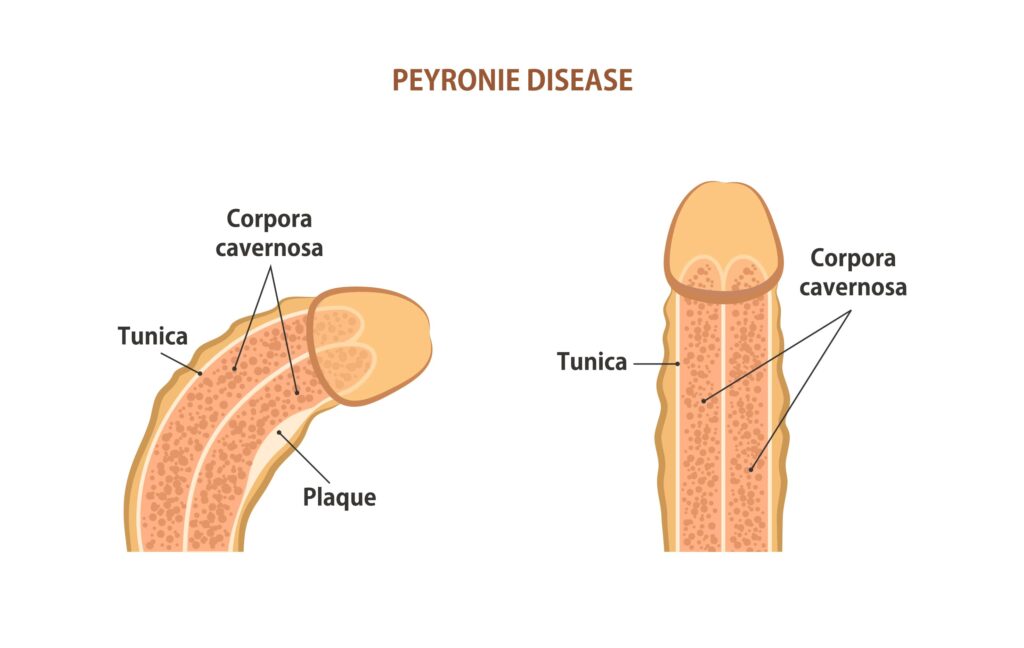 Understanding Peyronie's Disease
Peyronie's disease is no longer considered simply a penile curvature disorder. Instead, it is increasingly recognized as a chronic wound-healing abnormality characterized by persistent inflammation and excessive scar formation.
Repeated microtrauma to the erect penis may trigger an exaggerated inflammatory response within the tunica albuginea. In genetically susceptible individuals, normal tissue repair mechanisms become dysregulated, resulting in excessive collagen deposition and fibrosis rather than healthy tissue regeneration.
The pathological hallmark of Peyronie's disease is the formation of dense fibrotic plaques composed primarily of:
- Type I collagen
- Type III collagen
- Fibrin
- Activated myofibroblasts
- Transforming Growth Factor-beta (TGF-β)
- Reactive oxygen species
- Chronic inflammatory mediators
As fibrosis progresses, the normally elastic tunica albuginea loses its flexibility, causing the penis to bend toward the scarred side during erection.
Patients commonly experience:
- Penile curvature
- Penile shortening
- Painful erections
- Palpable plaques
- Erectile dysfunction
- Difficulty with sexual intercourse
- Anxiety
- Depression
- Reduced quality of life
Approximately 30–50% of men with Peyronie's disease also develop varying degrees of erectile dysfunction due to impaired vascular function and reduced elasticity of the corpora cavernosa.
Why Regenerative Medicine Is Different
Traditional treatments primarily address the symptoms of Peyronie's disease rather than its biological cause.
For example:
Collagenase injections break down collagen fibers but do not regenerate healthy tissue.
Penile surgery mechanically corrects curvature but removes or alters tissue.
Traction therapy remodels tissue mechanically but does not influence cellular repair pathways.
Regenerative medicine seeks to modify the biological environment responsible for fibrosis by targeting several key processes simultaneously:
- chronic inflammation
- oxidative stress
- fibroblast activation
- collagen overproduction
- impaired angiogenesis
- endothelial dysfunction
- extracellular matrix remodeling
Rather than simply removing scar tissue, regenerative therapies aim to promote tissue repair and restore a healthier balance between collagen deposition and degradation. Experimental approaches involving stem cells and their secreted factors are being investigated for their potential to influence these underlying mechanisms, although further clinical studies are needed to determine their long-term effectiveness and optimal use.
Read more about Stem Cells Protocol of treatment Erectile Dysfunction: Stem Cell Therapy in Erectile Dysfunction: Mechanisms, Cellular Protocol
Why Mesenchymal Stem Cells Are of Particular Interest
Mesenchymal stem cells have become one of the most extensively studied cell types in regenerative medicine because they possess multiple biological properties that may be relevant to fibrotic diseases.
Rather than replacing damaged tissue by directly becoming new penile cells, MSCs primarily act through paracrine signaling.
They secrete hundreds of biologically active molecules, including:
- anti-inflammatory cytokines
- anti-fibrotic mediators
- extracellular vesicles
- exosomes
- angiogenic growth factors
- immunomodulatory proteins
These signaling molecules communicate with surrounding tissues and may help regulate inflammation, fibrosis, and healing responses. Current research suggests that the therapeutic effects of MSCs are driven largely by these secreted factors rather than by long-term engraftment of the cells themselves.
Experimental studies have shown that MSCs may:
- reduce TGF-β signaling;
- decrease myofibroblast activation;
- modulate inflammatory responses;
- influence collagen remodeling;
- support angiogenesis;
- enhance endothelial function.
These biological properties provide the rationale for investigating MSC-based therapies in Peyronie's disease, though additional clinical evidence is required to establish their safety and effectiveness in larger patient populations.
CONTACT OUR DOCTOR

Placental Matrix-Derived Mesenchymal Stem Cells (PM-MSCs): A Novel Regenerative Strategy for Peyronie's Disease
Why Placental Matrix-Derived Mesenchymal Stem Cells?
Among the various sources of mesenchymal stem cells investigated in regenerative medicine, placental matrix-derived mesenchymal stem cells (PM-MSCs) obtained from the chorionic placenta have emerged as one of the most promising candidates for treating fibrotic disorders.

The human placenta is a transient organ that supports fetal growth through extensive tissue remodeling, angiogenesis, and immune regulation. Mesenchymal stem cells isolated from the chorionic matrix retain many of these regenerative characteristics, making them attractive for therapeutic applications in chronic inflammatory and fibrotic conditions.
Unlike adult tissue-derived stem cells, placental MSCs demonstrate:
- high proliferative capacity;
- low immunogenicity;
- potent immunomodulatory activity;
- secretion of anti-inflammatory cytokines;
- secretion of extracellular vesicles and exosomes;
- production of angiogenic and trophic growth factors;
- reduced expression of major histocompatibility complex (MHC) molecules.
These biological features allow PM-MSCs to interact with damaged tissues primarily through paracrine signaling, influencing the local microenvironment rather than permanently integrating into the tissue.
For Peyronie's disease, where chronic inflammation and excessive collagen deposition drive plaque formation, these properties provide a strong scientific rationale for investigation.
Biological Mechanisms of PM-MSCs in Peyronie's Disease
Peyronie's disease develops through a complex cascade of inflammation, oxidative stress, fibroblast activation, and extracellular matrix remodeling.
PM-MSCs may influence several of these pathways simultaneously.
Modulation of Chronic Inflammation
Persistent inflammation contributes to ongoing plaque maturation.
Activated macrophages, T lymphocytes, and inflammatory cytokines maintain an environment that favors fibrosis.
Experimental studies suggest that mesenchymal stem cells can modulate immune responses by secreting anti-inflammatory mediators, including:
- Interleukin-10 (IL-10)
- Transforming Growth Factor-beta modulators
- Prostaglandin E2
- Hepatocyte Growth Factor
- Indoleamine 2,3-dioxygenase (IDO)
Rather than completely suppressing inflammation, MSCs appear to promote resolution of the inflammatory response, helping shift tissues toward repair.
Anti-Fibrotic Activity
Fibrosis represents the defining pathological feature of Peyronie's disease.
The cytokine Transforming Growth Factor-beta 1 (TGF-β1) is considered one of the principal drivers of plaque development.
TGF-β stimulates fibroblast activation and their transformation into myofibroblasts—cells responsible for excessive collagen production and scar contraction.
Preclinical studies suggest that MSC-derived signaling molecules may:
- reduce fibroblast activation;
- decrease myofibroblast differentiation;
- influence collagen synthesis;
- promote extracellular matrix remodeling.
Although these findings are promising, confirmation in larger human studies is still needed.
Promotion of Angiogenesis
Healthy penile tissue depends on an intact microvascular network.
Fibrosis disrupts local blood supply, contributing to tissue hypoxia and impaired healing.
PM-MSCs secrete numerous angiogenic mediators, including:
- Vascular Endothelial Growth Factor (VEGF)
- Fibroblast Growth Factor (FGF)
- Platelet-Derived Growth Factor (PDGF)
- Angiopoietins
These factors may support the formation of new capillaries and improve tissue perfusion, creating a microenvironment more favorable for repair.
Extracellular Matrix Remodeling
Healthy wound healing requires a balance between collagen synthesis and collagen degradation.
In Peyronie's disease, this balance is disrupted, leading to progressive plaque formation.
Mesenchymal stem cells are thought to influence enzymes involved in extracellular matrix turnover, including matrix metalloproteinases (MMPs) and their inhibitors (TIMPs). Through these pathways, MSCs may help regulate collagen remodeling, although the precise mechanisms in human Peyronie's disease remain under investigation.
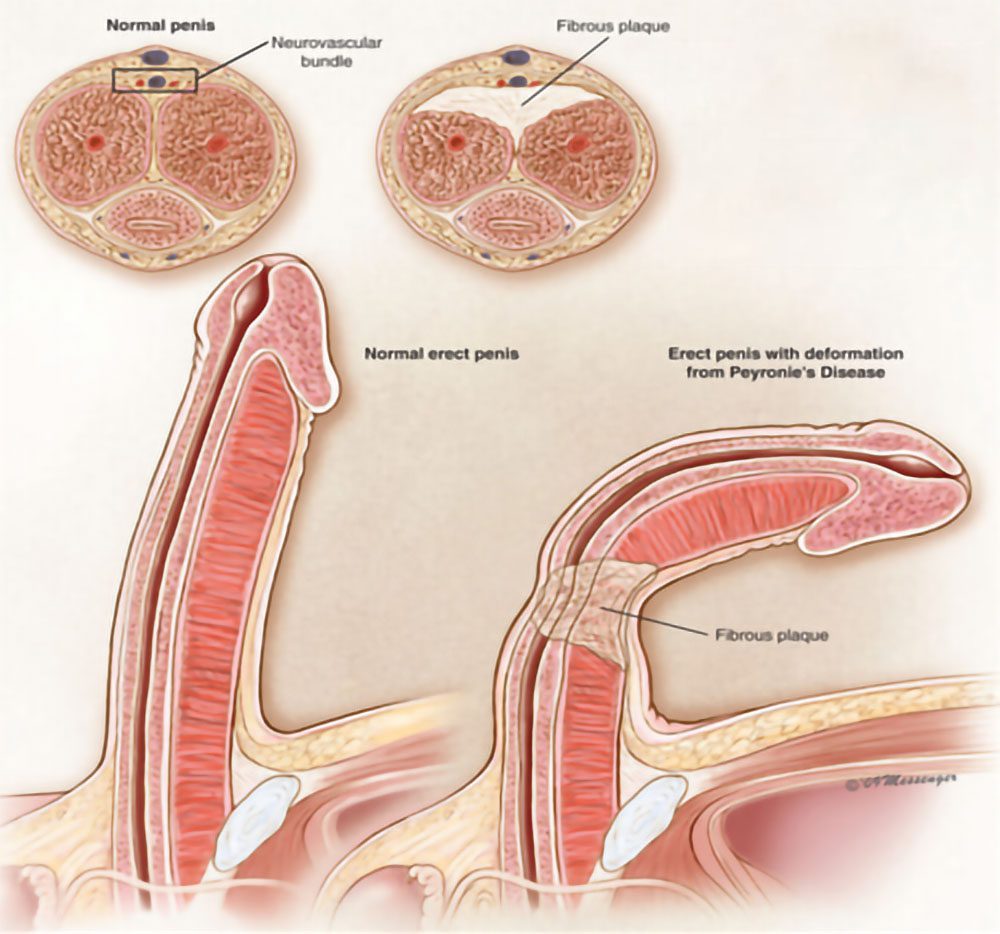 The First Clinical Investigation: Levy et al.
One of the earliest human clinical studies evaluating placental mesenchymal stem cells for Peyronie's disease was conducted by Jason A. Levy, DO, and colleagues.
This pilot clinical study was designed primarily to determine whether intracavernosal administration of PM-MSCs was technically feasible and safe in men with Peyronie's disease.
Study Objectives
The primary objective was:
To determine the feasibility and effects of using placental matrix-derived mesenchymal stem cells in the management of Peyronie's disease.
Unlike large randomized controlled trials designed to establish definitive efficacy, this Phase I study focused on safety, feasibility, and preliminary clinical observations.
Patient Selection
Patients enrolled in the study had clinically diagnosed Peyronie's disease with palpable penile plaques and penile curvature affecting sexual function.
Baseline evaluation included:
- physical examination;
- plaque assessment;
- measurement of penile curvature;
- erectile function evaluation;
- standardized patient questionnaires;
- photographic documentation.
These baseline measurements allowed investigators to compare changes following treatment.
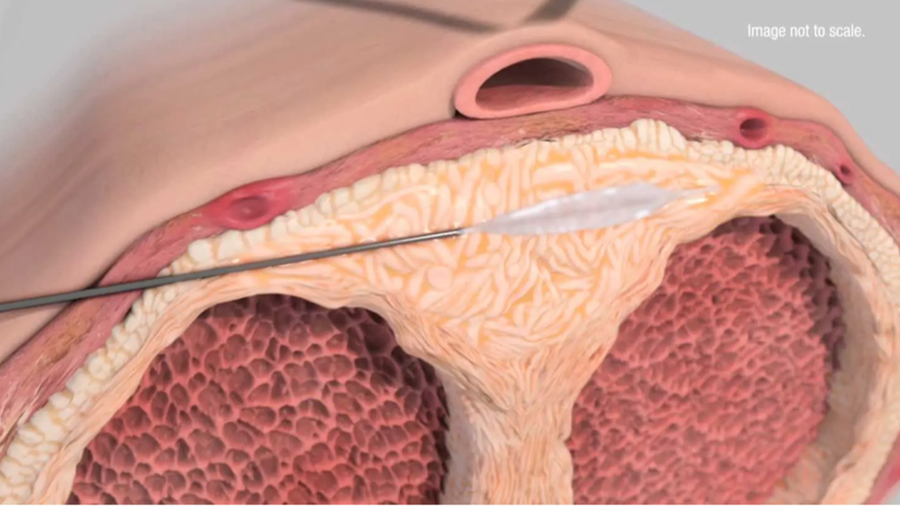
Intracavernosal Injection Protocol
The treatment protocol described by Levy and colleagues involved localized administration of placental matrix-derived mesenchymal stem cells directly into the penile tissue.
The investigators prepared the cellular product as follows:
- 1 mL of PM-MSC suspension was diluted with 2 mL of isotonic saline, producing a total volume of 3 mL.
The injection protocol consisted of two stages:
Step 1 — Plaque Injection
Up to 2 mL of the diluted PM-MSC solution was carefully injected in and around the Peyronie's plaque.
The goal was to expose the fibrotic tissue directly to the regenerative cell population.
Step 2 — Corporal Injection
The remaining PM-MSC suspension was distributed evenly between both corpora cavernosa at the penile base.
This approach was intended to allow broader exposure of corporal tissue to the secreted regenerative factors while also targeting the primary fibrotic lesion.
The authors reported that the procedure was technically feasible and well tolerated within the small study population.
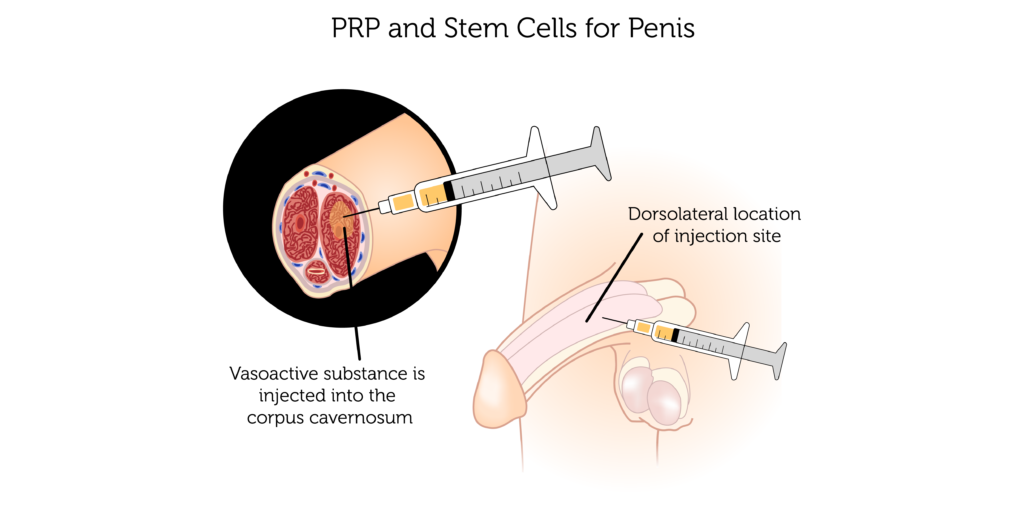
Clinical Outcomes
Although the study included only a limited number of patients and was not powered to establish definitive efficacy, several encouraging observations were reported during follow-up.
Investigators noted improvements in multiple clinical parameters, including:
- reduction in penile curvature in several participants;
- decreased plaque size and firmness;
- improved erectile function in selected patients;
- reduction in penile pain;
- increased patient satisfaction.
Importantly, no serious procedure-related adverse events were reported during the study period.
Because of the small sample size and lack of a control group, these findings should be interpreted as preliminary and hypothesis-generating rather than conclusive evidence of clinical benefit. Read more about success rate of stem cells therapy: Stem Cell Therapy Success Rate: What Patients Should Know About Effectiveness and Results
Why This Study Was Important
Although modest in scale, Levy's investigation represented an important milestone in regenerative medicine for Peyronie's disease.
Rather than attempting to mechanically remove scar tissue or surgically correct penile curvature, the study explored the possibility of biologically modifying the disease process itself.
The work demonstrated that localized delivery of placental-derived mesenchymal stem cells was feasible and provided early clinical observations that justified further investigation in larger, controlled studies.
Subsequent research has continued to explore cell-based therapies for Peyronie's disease, but robust randomized clinical trials are still needed before these approaches can be considered standard treatment.
The Evolution Toward Combination Regenerative Therapies
Since the publication of the Levy study, advances in regenerative medicine have shifted attention toward multimodal biologic strategies. Researchers have proposed that combining different regenerative components may provide complementary mechanisms of action.
Experimental protocols under investigation have explored combinations of:
- placental matrix-derived mesenchymal stem cells (PM-MSCs);
- adipose-derived stem cells (ADSCs);
- extracellular vesicles and exosomes;
- platelet-derived growth factors;
- endothelial progenitor or endothelial-supporting cells.
The scientific rationale is that these biologic agents may target different aspects of tissue repair—including immune modulation, angiogenesis, extracellular matrix remodeling, and cell-to-cell signaling. However, while each component has shown promise in preclinical or early clinical studies, the efficacy and safety of such combination protocols for Peyronie's disease have not yet been established in large controlled clinical trials.
Adipose-Derived Stem Cells (ADSCs), Exosomes, Growth Factors and Endothelial Cells in Peyronie’s Disease: A Regenerative Combination Approach
Adipose-Derived Stem Cells (ADSCs) in Urogenital Regeneration
Adipose-derived stem cells (ADSCs) are mesenchymal stem cells isolated from human adipose tissue. They are among the most accessible and abundant sources of autologous stem cells in regenerative medicine.
Compared to other MSC sources, ADSCs are characterized by:
- high yield from minimally invasive liposuction;
- strong paracrine signaling activity;
- robust secretion of growth factors and cytokines;
- immunomodulatory properties similar to bone marrow MSCs;
- ability to differentiate into multiple mesodermal lineages.
In the context of fibrotic disorders such as Peyronie’s disease, ADSCs are of particular interest due to their potential to influence:
- fibroblast activity;
- extracellular matrix remodeling;
- angiogenesis;
- inflammatory signaling pathways.
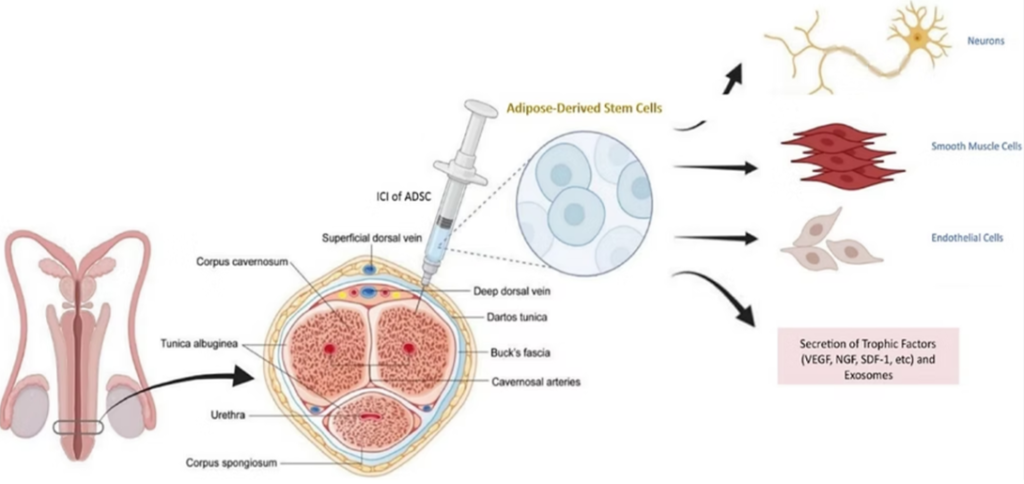 Biological Rationale in Peyronie’s Disease
Peyronie’s disease is driven by dysregulated wound healing, where fibroblasts produce excessive collagen in response to microtrauma and chronic inflammation.
ADSCs may contribute to tissue remodeling through paracrine secretion of:
- Vascular Endothelial Growth Factor (VEGF)
- Hepatocyte Growth Factor (HGF)
- Transforming Growth Factor-beta modulators
- Interleukin-10 (IL-10)
- Basic Fibroblast Growth Factor (bFGF)
These molecules may help shift the tissue environment from a fibrotic state toward a regenerative state.
Although preclinical studies support anti-fibrotic effects of ADSCs in various tissues, clinical data specifically in Peyronie’s disease remain limited and investigational.
Exosomes: Cell-Free Regenerative Signaling in Peyronie’s Disease
Exosomes are nano-sized extracellular vesicles released by cells, including mesenchymal stem cells. They contain biologically active molecules such as:
- microRNAs (miRNAs)
- messenger RNA (mRNA)
- proteins
- lipids
- signaling peptides
Unlike whole-cell therapies, exosome-based approaches are considered cell-free regenerative medicine, which may reduce some of the risks associated with live cell transplantation.
Mechanisms of Action
In fibrotic diseases, exosomes derived from MSCs have been shown in experimental models to:
- regulate fibroblast activation;
- suppress pro-fibrotic signaling pathways (including TGF-β);
- modulate inflammatory cytokines;
- enhance angiogenesis;
- promote extracellular matrix remodeling.
Potential Role in Peyronie’s Disease
In Peyronie’s disease, exosomes may theoretically:
- reduce collagen overproduction in penile plaques;
- modulate chronic inflammatory responses;
- improve microvascular function in the corpora cavernosa;
- support tissue remodeling and repair.
However, it is critical to emphasize that exosome therapy for Peyronie’s disease is still in early experimental stages, and no large-scale randomized clinical trials have confirmed its clinical efficacy.
Growth Factors in Penile Tissue Repair
Growth factors are naturally occurring proteins that regulate cellular growth, differentiation, and tissue repair.
In regenerative medicine for Peyronie’s disease, several growth factors are of interest:
Vascular Endothelial Growth Factor (VEGF)
- Promotes angiogenesis
- Improves tissue oxygenation
- Supports endothelial regeneration
Platelet-Derived Growth Factor (PDGF)
- Stimulates fibroblast activity in controlled healing
- Supports extracellular matrix turnover
- Plays a role in wound repair signaling
Fibroblast Growth Factor (FGF)
- Enhances tissue regeneration
- Supports endothelial and smooth muscle cell proliferation
Hepatocyte Growth Factor (HGF)
- Anti-fibrotic signaling effects
- Anti-apoptotic properties
- Tissue regeneration support
Clinical Relevance
In Peyronie’s disease, the goal of growth factor modulation is not uncontrolled tissue growth, but rather:
- restoring balanced wound healing;
- reducing pathological fibrosis;
- improving vascular integrity;
- supporting functional penile tissue remodeling.
Most growth factor-based strategies remain experimental or adjunctive in regenerative protocols.
Endothelial Cells and Vascular Regeneration
Endothelial dysfunction plays an important role in Peyronie’s disease progression. The penile vasculature is essential for maintaining erectile function and tissue oxygenation.
Damage to endothelial integrity contributes to:
- hypoxia within penile tissue;
- increased oxidative stress;
- promotion of fibrotic signaling pathways;
- reduced healing capacity.
Endothelial Progenitor Cells (EPCs)
Endothelial progenitor cells are circulating cells capable of contributing to vascular repair and neovascularization.
Potential functions include:
- restoration of damaged microvessels;
- improvement of penile blood flow;
- enhancement of tissue oxygen delivery;
- support of regenerative microenvironment.
Although EPC-based therapies are being explored in cardiovascular and urological research, their application in Peyronie’s disease remains investigational.
 Combined Regenerative Protocol: Scientific Rationale
The idea of combining PM-MSCs, ADSCs, exosomes, growth factors, and endothelial-supporting cells arises from the recognition that Peyronie’s disease is a multifactorial fibrotic disorder.
No single mechanism fully explains disease progression; therefore, a multimodal approach is theoretically more effective.
Proposed Synergistic Mechanisms
1. Anti-Inflammatory Synergy
- MSCs (PM-MSCs + ADSCs) reduce inflammatory signaling
- Exosomes modulate cytokine expression
- Growth factors help resolve chronic inflammation
2. Anti-Fibrotic Remodeling
- Downregulation of TGF-β pathways
- Reduced fibroblast-to-myofibroblast transition
- Regulation of collagen deposition
3. Angiogenic Enhancement
- VEGF and EPCs promote new blood vessel formation
- Improved oxygenation reduces fibrotic signaling
4. Extracellular Matrix Remodeling
- Balanced collagen synthesis and degradation
- Activation of matrix metalloproteinases (MMPs)
5. Cellular Communication Optimization
- Exosomes act as signaling mediators between regenerative cells
- Enhanced paracrine network coordination
Intravenous vs Local Delivery Concepts
Some experimental regenerative protocols explore dual delivery strategies:
Intravenous Administration
- MSCs and exosomes circulate systemically
- Potential systemic immunomodulatory effects
- Modulation of inflammatory signaling pathways
Intracavernosal / Local Injection
- Direct delivery to penile tissue
- Higher local concentration at plaque site
- Targeted anti-fibrotic effects
The combination of systemic and local delivery is hypothesized to enhance overall therapeutic signaling, although this approach remains investigational and is not established as a standard clinical protocol.
Clinical Evidence Status
At present:
- PM-MSC intracavernosal therapy has limited early-phase clinical data (Levy et al.)
- ADSCs show strong preclinical promise but limited Peyronie-specific trials
- Exosome therapy is in early translational research stages
- Endothelial cell therapies remain experimental
- Combination regenerative protocols lack large randomized controlled trials
Therefore, while the biological rationale is strong, clinical validation is still in development.
Safety Considerations in Regenerative Therapies
Across early studies involving stem cell-based approaches:
- no consistent serious adverse events have been reported in small cohorts;
- procedural safety appears acceptable in controlled clinical environments;
- long-term safety, however, remains under investigation.
Key considerations include:
- source and quality of stem cells;
- manufacturing standards (GMP conditions);
- dosing protocols;
- route of administration;
- patient selection criteria.
PREPARE AN INDIVIDUAL TREATMENT PLAN BASED ON YOUR MEDICAL HISTORY
Clinical Evidence Summary: What Do We Actually Know?
The current clinical evidence for regenerative therapies in Peyronie’s disease is still in an early developmental phase.
One of the most cited early clinical investigations is the pilot study by Jason A. Levy and colleagues, which evaluated the intracavernosal administration of placental matrix-derived mesenchymal stem cells (PM-MSCs) in men with Peyronie’s disease.
Key Characteristics of the Study
- Small pilot cohort (early-phase clinical evaluation)
- Primary focus: feasibility and safety
- Open-label design (no placebo control group)
- Intracavernosal and peri-plaque injection of PM-MSCs
- Follow-up assessing curvature, plaque characteristics, and erectile function
Intracavernosal Protocol Recap
The described protocol included:
- dilution of PM-MSC suspension with isotonic saline;
- targeted injection into and around Peyronie’s plaques;
- additional distribution into the corpora cavernosa.
This approach was designed to expose both the fibrotic plaque and surrounding penile tissue to regenerative paracrine signaling.
Reported Observations
Within the limitations of the study design, investigators observed:
- technical feasibility of intracavernosal administration;
- acceptable safety profile in the small sample;
- trends toward improvement in penile curvature in some patients;
- potential softening or reduction of plaque characteristics;
- subjective improvement in erectile function in selected cases.
Critical Interpretation
It is essential to interpret these findings correctly:
- The study was not powered to prove efficacy
- No randomized control group was included
- Placebo effect cannot be excluded
- Natural variability of disease progression may influence outcomes
Therefore, the results are best classified as:
preliminary clinical signals rather than definitive evidence
Limitations of Current Stem Cell Research in Peyronie’s Disease
Despite growing interest in regenerative medicine, several important limitations remain.
1. Lack of Large Randomized Controlled Trials
Most available studies are:
- small-scale
- early-phase
- observational or pilot in nature
There is currently no large Phase III clinical trial confirming stem cell therapy as a standard treatment for Peyronie’s disease.
2. Heterogeneity of Stem Cell Products
Different studies use different:
- stem cell sources (placental, adipose, bone marrow)
- processing methods
- dosages
- delivery routes
This makes it difficult to compare outcomes or establish standardized protocols.
3. Unclear Long-Term Outcomes
Key unanswered questions include:
- durability of treatment effects
- long-term safety of intracavernosal stem cell administration
- risk of fibrosis recurrence
- potential variability between patients
4. Regulatory Status
Most regenerative therapies for Peyronie’s disease, including:
- PM-MSCs
- ADSCs
- exosomes
remain classified as:
investigational therapies in most regulatory frameworks
They are not yet approved as standard-of-care treatments for Peyronie’s disease.
Frequently Asked Questions
What is the most promising regenerative treatment for Peyronie’s disease?
Currently, mesenchymal stem cell therapy (including PM-MSCs and ADSCs) is considered one of the most promising investigational approaches, but it is not yet an approved standard treatment.
Can stem cells cure Peyronie’s disease?
There is currently no clinical evidence that stem cell therapy can cure Peyronie’s disease. Early studies show potential improvements in symptoms and tissue characteristics, but larger trials are needed.
What are placental mesenchymal stem cells (PM-MSCs)?
PM-MSCs are stem cells derived from the chorionic placenta with strong immunomodulatory, anti-inflammatory, and regenerative properties, currently being studied in experimental therapies.
Are exosomes effective for Peyronie’s disease?
Exosome therapy is still experimental. Preclinical studies suggest anti-fibrotic and regenerative effects, but clinical evidence in Peyronie’s disease is limited.
Is stem cell therapy approved for Peyronie’s disease?
No. Stem cell therapies for Peyronie’s disease remain investigational and are not widely approved as standard medical treatment.
What is the goal of regenerative therapy in Peyronie’s disease?
The goal is to:
- reduce fibrosis
- improve tissue elasticity
- restore vascular function
- modulate inflammation
- improve erectile function
Conclusion
Peyronie’s disease remains a complex fibrotic condition with limited fully restorative treatment options in conventional urology.
The emergence of regenerative medicine—including placental matrix-derived mesenchymal stem cells (PM-MSCs), adipose-derived stem cells (ADSCs), exosomes, growth factors, and endothelial progenitor cells—represents a significant shift in therapeutic strategy from symptom management toward potential tissue regeneration.
The early clinical work by Jason A. Levy and colleagues demonstrated that intracavernosal administration of PM-MSCs is technically feasible and may be associated with encouraging preliminary outcomes in selected patients. However, due to the small scale and early-phase nature of the research, these findings should be interpreted as exploratory.
At present, combination regenerative protocols remain investigational, and their safety and efficacy must be confirmed through large-scale, randomized, controlled clinical trials.
Nevertheless, the biological rationale is strong. Targeting inflammation, fibrosis, angiogenesis, and extracellular matrix remodeling simultaneously offers a scientifically plausible framework for future therapies.
As research advances, Peyronie’s disease treatment may increasingly shift toward personalized, multi-modal regenerative medicine, integrating cellular therapies, extracellular vesicles, and molecular signaling approaches.